How Long Does the Rehabilitation Process Typically Take at a Facility Like Autumn Lake Healthcare?

The rehabilitation process typically lasts between 21 and 90 days, depending on the patient’s specific medical diagnosis and their rate of functional progress. While minor orthopedic recoveries may be completed in as little as three weeks, complex neurological or cardiac conditions often require six to twelve weeks of intensive, multidisciplinary therapy to ensure a safe and permanent transition back to independent living.

Understanding the Rehabilitation Timeline

Entering a subacute setting is a transition focused entirely on returning to the comfort of your own home. The duration of your stay is not a pre-set number; it is a calculated clinical roadmap. At a premier rehabilitation center in Salem, NJ, the timeline is dictated by “milestones over minutes.” This means that while we track average durations for specific conditions, your personal health data and daily stamina are the true metrics for your discharge date.

Recovery Windows by Condition

To provide a clearer picture of what to expect, we categorize the average length of stay based on common clinical presentations. These estimates include the time needed for physical therapy, occupational therapy, and, when necessary, speech-language pathology.

Condition Type Average Length of Stay Primary Therapy Focus
Orthopedic (Hip/Knee/Fracture) 14 – 24 Days Mobility, Gait Training, and Weight-bearing
Stroke & Neurological Recovery 30 – 90 Days Neuroplasticity, Fine Motor Skills, and ADLs
Cardiac & Pulmonary Rehab 21 – 45 Days Cardiovascular Endurance and Oxygen Monitoring
Post-Surgical Wound Care 10 – 30 Days Infection Prevention and Tissue Healing

The Stages of the Clinical Rehabilitation Pathway

When you arrive at a skilled nursing facility, the process follows a structured progression designed to maximize recovery while minimizing the risk of hospital readmission. During a recent clinical review of our service areas, we found that patients who adhere to this four-stage progression experience significantly better long-term outcomes.

1. The Initial Assessment (Days 1–2)

Upon admission, a multidisciplinary team, including physiatrists, registered nurses, and therapists, conducts a comprehensive evaluation. This phase establishes your baseline, identifying exactly which physical milestones you must hit to navigate your specific home environment safely.

2. The Intensive Therapy Phase (Weeks 1–4)

This is the most active period of recovery. Patients typically engage in one to three hours of therapy per day. In a top-tier nursing home in Salem, NJ, this involves rebuilding the muscle memory and stamina required for independent movement and daily routines.

3. Adaptive Learning and Safety (Weeks 4–8)

As physical strength returns, the focus shifts to Activities of Daily Living (ADLs). This involves practicing how to navigate a kitchen, use a bathroom safely, and utilize any necessary assistive devices. This stage is crucial for ensuring that once you leave, you do not suffer a relapse or fall.

4. Discharge Planning (Ongoing)

Discharge planning begins on day one. Social workers and case managers coordinate with your family to ensure that your home environment in Salem, NJ, is ready, whether that means arranging for ramp installations or setting up follow-up home health visits.


A nursing home resident smiling while holding a green hand-strengthening tool during a therapy session.


Excellence in Care: Our Service Pillars

We are known for our excellence in long-term care, providing round-the-clock skilled nursing for a wide range of complex medical conditions. To achieve this, we maintain a specific set of clinical and hospitality standards that ensure the recovery environment is as effective as the therapy itself.

Our Core Service Features Include:

  • A Delightful Dining Experience: Nutrition is the fuel for recovery. Patients can choose to join us in our dining room to foster social connection or stay in the privacy of their own room.
  • Comprehensive Amenities: We provide spacious private and semi-private rooms with complimentary cable and WiFi, ensuring you stay connected to your support system.
  • Healing Spaces: Recovery is bolstered by our private courtyard and garden, on-site beauty salon, spacious lounges, and daily housekeeping and laundry service.
  • Financial Coordination: We simplify the logistics of care by accepting Medicare, Medicaid, most insurances, and private pay.

Common Misconception: Debunking the “20-Day Limit.”

One of the most persistent myths in the senior care industry is that rehabilitation must end after 20 days. This misconception stems from the fact that Medicare typically covers 100% of the cost for the first 20 days of a benefit period.

The Reality: Clinical progress does not follow an insurance calendar. If a patient is still showing measurable daily improvement at Autumn Lake Healthcare at Salem County, therapy remains medically necessary. Leaving a facility prematurely simply because of a misunderstood insurance timeline is a leading cause of re-injury. Your care team will work with you to navigate coverage for days 21–100 to ensure your recovery is complete.

Frequently Asked Questions

What is the difference between a nursing home and a rehabilitation center?

A nursing home generally focuses on long-term residential care, whereas a rehabilitation center is designed for short-term, intensive therapy with the goal of returning the patient home.

Is assisted living in Salem, NJ, the same as subacute rehab?

No. Assisted living in Salem, NJ, is for individuals who need help with daily tasks but do not require 24/7 clinical nursing. Subacute rehab is a higher level of medical care.

Will my insurance pay for the entire stay?

Most plans, including Medicare, cover subacute rehabilitation if there is a demonstrated medical necessity. Our team works directly with providers to verify coverage before admission.

What happened to the Salem Place nursing home?

The site formerly known to some as the Salem place nursing home has evolved. The region now emphasizes modernized, guest-centered rehabilitation that prioritizes safe, efficient discharges.

To Sum Up

The road to recovery requires the right partners. At Autumn Lake Healthcare at Salem County, we combine elite clinical expertise with the warmth of a community-focused environment. Whether you are recovering from a planned surgery or an unexpected medical event, our team is dedicated to your return to independence. Visit us online to take a virtual tour or schedule a visit.

The Ultimate Guide to Social Activities in Nursing Homes: Keeping Residents Engaged and Happy

The best social activities for nursing home residents involve a mix of cognitive stimulation, physical movement, and intergenerational connection to ensure emotional and physical well-being. High-impact programs include music therapy, adaptive gardening, and pet visitation, which effectively reduce isolation and foster a sense of purpose. By tailoring these events to individual mobility and cognitive levels, facilities can significantly enhance the daily joy and overall quality of life for every resident.

The Core Pillars of Resident Engagement

In the world of long-term care, socialization is a fundamental component of clinical health. Research shows that seniors who engage in regular social interaction experience lower rates of depression and slower cognitive decline. To build a successful social calendar, activity directors must look beyond “filling time” and focus on filling specific emotional and physical needs.

At Autumn Lake Healthcare, Salem, NJ, we view engagement as a multi-dimensional effort. Whether a resident is recovering from surgery or settling into long-term care, their social life should be as vibrant as their medical care is precise.

Activity Category Comparison

Category Primary Benefit Example Activity
Cognitive Mental acuity & memory Trivia nights or “Brain Fitness” games
Physical Mobility & circulation Chair yoga or balloon volleyball
Social Emotional connection Interactive “Happy Hour” or tea parties
Sensory Stress reduction Aromatherapy or tactile art projects

Top 10 Social Activities for Maximum Engagement

When selecting activities, the goal is to provide variety that appeals to different personality types. A former librarian might prefer a book club, while a former athlete might thrive in a competitive Wii bowling league. Here are ten activities currently leading the way in modern senior living:

  1. Intergenerational Programs: Connecting seniors with local youth through reading programs or “pen pal” initiatives creates a unique sense of mentorship.
  2. Music Therapy: From live performances to personalized playlists, music is a powerful tool for reaching residents with memory impairment.
  3. Pet Visitation: Certified therapy animals provide unconditional affection and can lower blood pressure and anxiety.
  4. Culinary Clubs: Residents enjoy a delightful dining experience even when they are the ones doing the decorating. Cooking classes for no-bake treats foster a sense of accomplishment.
  5. Virtual Travel: Using technology, residents can “visit” world landmarks like the Eiffel Tower or the Great Wall of China from a lounge chair.
  6. Gardening: Whether in a private courtyard and garden or using indoor raised beds, gardening provides tactile stimulation and a connection to nature.
  7. Tech Training: Empowering residents to use tablets for video-calling family ensures they remain connected to their loved ones outside the facility.
  8. Storytelling Circles: Guided prompts help residents share their life legacies, ensuring their stories are honored and preserved.
  9. Artistic Expression: Watercolor painting and clay modeling allow for non-verbal communication and creative release.
  10. Themed Celebrations: From “National Pi Day” to decade-themed parties, themes make the calendar feel special.

During a recent community assessment at Autumn Lake, Salem, NJ, we found that residents who engaged in at least three different activity categories per week reported significantly higher satisfaction with their daily environment.


A nursing home staff member smiling at his desk alongside a person dressed in a Grinch costume for a holiday event.


Debunking the “One Size Fits All” Myth

A common industry misconception is that all residents should participate in large group activities to be considered “socially engaged.” In reality, forced large-scale socialization can be overstimulating and anxiety-inducing for many, especially those with dementia. Effective engagement is not about the number of people in the room, but the quality of the interaction.

At our Salem nursing & rehabilitation center, we prioritize the individual’s comfort level. This includes one-on-one visits for introverted residents and “parallel programming,” where residents work on individual crafts in a shared space without the pressure of direct performance.

Applying the Autumn Lake Standard of Excellence

We are known for our excellence in long-term care, providing round-the-clock skilled nursing for a wide range of complex medical conditions. However, we believe that medical excellence is only half the battle. Our proprietary approach integrates a luxury-tier environment with clinical precision to create a holistic home.

Our Secret Language: The Comprehensive Care Framework

We solve the problem of resident boredom and isolation by providing a physical and service-based environment that supports social health naturally. This includes:

  • Spacious Accommodations: We offer spacious private and semi-private rooms that provide a comfortable sanctuary for residents to recharge.
  • A Personalized Dining Experience: Residents enjoy fine dining with a variety of menu selections. They can choose to join us in our dining room for socialization or stay in the privacy of their own room.
  • Convenience & Comfort: With an on-site beauty salon, complimentary cable and WiFi, and daily housekeeping and laundry service, residents are free to focus on their social and physical recovery.
  • Open Spaces: Our spacious lounges, private courtyard, and garden provide the “third spaces” necessary for organic friendships to bloom.

When visiting Autumn Lake Salem, you will see this framework in action, where the environment is specifically designed to encourage movement and interaction.

Integrating Clinical Care and Community

For those seeking a Salem Rehabilitation Center, it is important to find a facility that balances therapy with lifestyle. Medical recovery is faster when the patient is motivated, and nothing motivates quite like a supportive community. We accept Medicare, Medicaid, most insurances, and private pay to ensure our community remains accessible to those who need us most.

Whether you are looking for a nursing home, for a short-term post-surgical stay, or long-term support, the integration of social activities into the clinical plan is a non-negotiable part of our care model.

Frequently Asked Questions

What are the most popular activities for nursing home residents?

Music-related events, bingo, pet therapy, and “Happy Hour” socials remain the most popular activities across most facilities due to their interactive and nostalgic nature.

How do nursing homes handle residents who refuse to socialize?

Staff usually take a “gentle introduction” approach. This involves one-on-one room visits, bringing activity supplies to the resident, and slowly encouraging them to observe a group activity from a distance before joining.

Can social activities help with dementia?

Yes. Activities like sensory stimulation, familiar music, and repetitive tasks (like folding towels or sorting colors) can reduce agitation and provide a sense of “success” for those with cognitive decline.

To Sum Up

At Autumn Lake Healthcare at Salem County, we believe that every resident deserves a life filled with dignity, purpose, and laughter. From our private courtyard and garden to our fine dining room, every inch of our facility is designed to foster a vibrant community. By focusing on the unique needs of the individual, we ensure that engagement isn’t just a scheduled event; it’s a way of life.

Experience the difference that true community makes. If you or a loved one is looking for a Salem nursing & rehabilitation center that treats you like family while providing world-class medical care, we invite you to tour our facility. Contact us today to learn more about our admissions or to schedule a visit.

How Skilled Nursing Care Enhances Resident Comfort: A Glimpse into 24/7 Medical Support

Skilled nursing care enhances resident comfort by providing continuous medical monitoring, immediate pain management, and personalized clinical care that addresses needs the moment they arise. This 24/7 support framework eliminates the anxiety of waiting for off-site medical intervention, ensuring that both chronic conditions and acute symptoms are managed proactively to maintain a high quality of life.

The Clinical Foundation of Constant Comfort

When a resident requires a higher level of medical attention, the transition shouldn’t feel like a loss of independence. The true value of a skilled nursing environment is the “clinical safety net” that operates around the clock. Unlike traditional assisted living in Salem, where staff levels may not support complex medical interventions at 3:00 AM, skilled nursing is anchored by Registered Nurses (RNs) and Licensed Practical Nurses (LPNs). This means medication adjustments, vital sign monitoring, and respiratory support happen in real-time, preventing minor discomforts from escalating into stressful emergency room visits.

Comparing Care Levels: The Hierarchy of Support

To understand how constant care translates to daily ease, we must look at the specific resources available on-site. When families research nursing homes in Salem, NJ, they often prioritize the distinction between basic custodial care and advanced clinical oversight.

Feature Traditional Home Care 24/7 Skilled Nursing
Medical Response Dependant on 911/On-call Immediate On-site Team
Pain Management Scheduled/Limited Real-time Titration
Therapy Access Periodic Visits Daily Integrated Rehab
Safety Oversight Occasional Check-ins Continuous Monitoring

By centralizing these services, the resident is spared the physical toll of frequent transport to outside clinics. Everything from wound care to IV therapy is managed within the facility, preserving the resident’s energy for recovery.

Debunking the “Hospital-Lite” Myth

A common industry misconception is that a Salem nursing home must be cold and sterile to be medically effective. This myth suggests that “clinical excellence” and “home-like comfort” are mutually exclusive. In reality, modern skilled nursing functions as a “clinical sanctuary.” The goal is to strip away the frantic energy of an acute-care hospital and replace it with a rhythmic, predictable approach to healing. Medical equipment is integrated discreetly into the environment, ensuring that the setting feels supportive rather than institutional.


A nursing home resident smiling while posing for a photo with a person dressed in a Grinch costume.


Integrating the Autumn Lake Wellness Blueprint

Our approach is defined by the Autumn Lake Wellness Blueprint, a proprietary standard that merges high-acuity medical care with hospitality-grade living. Our newly-renovated facility includes a peaceful, modern lobby and a cutting-edge therapy room that promotes wellness and recovery in a joyful atmosphere. In addition to sub-acute rehabilitation, we are known for our excellence in long-term care, providing round-the-clock skilled nursing for a wide range of complex medical conditions. This blueprint ensures that residents don’t just “receive care”—they thrive in an environment designed for dignity.

When evaluating nursing homes in Salem, this blueprint is what defines the daily experience. We recognize that a delightful dining experience is essential for mental health; residents can choose to join us in our social dining room or enjoy a meal in the privacy of their own room. The physical manifestation of this blueprint includes:

  • Spacious private & semi-private rooms for personal retreat.
  • Complimentary cable & WiFi to maintain social connections.
  • A private courtyard and garden for fresh air and reflection.
  • Fine dining with a variety of menu selections.
  • On-site beauty salon for personal grooming and confidence.
  • Spacious Lounges for community engagement.
  • Daily Housekeeping & Laundry Service to remove the burden of chores.

Predictive Comfort and Clinical Precision

Beyond the physical amenities, 24/7 nursing allows for predictive care. While most Salem nursing homes respond to pain after a resident asks for help, a 24/7 skilled environment monitors for the “early signals” of distress. Whether it is a change in gait during a walk to the dining room or a slight shift in oxygen saturation, nurses intervene before the resident even feels the onset of discomfort. This proactive stance reduces the physiological stress on the body, which is critical for those recovering from surgery or managing cardiac conditions.

Financial Peace of Mind and Accessibility

The complexity of medical billing shouldn’t add to the stress of recovery. Our administrative team works to ensure that families can focus on their loved one’s progress rather than paperwork. We accept Medicare, Medicaid, most insurances, and private pay, providing a transparent path to elite care. This accessibility ensures that high-quality skilled nursing remains a viable option for the community, regardless of the complexity of the medical condition or the length of the stay.

Frequently Asked Questions

Q: What makes skilled nursing different from a hospital stay?

A: While both offer 24/7 medical care, hospitals focus on acute crisis stabilization. Skilled nursing is designed for longer-term recovery and chronic disease management in a residential setting that includes social activities and personalized therapy.

Q: Can residents choose their own daily schedule?

A: Yes. While medical treatments follow a clinical schedule, residents have autonomy over their dining choices, social participation, and use of amenities like the beauty salon or private courtyard.

Q: Is 24/7 nursing only for end-of-life care?

A: No. Many residents utilize 24/7 skilled nursing for “sub-acute” care, which is a short-term, intensive rehabilitation period following a surgery or injury, to return home.

To Sum Up

Choosing a care partner is a significant decision. At Autumn Lake Healthcare at Salem, we combine elite 24/7 medical supervision with the premier amenities your loved one deserves. From our private courtyard to our cutting-edge therapy suite, we invite you to see how we are redefining the standard for care in the community.

Ready to learn more? Visit us today to schedule a tour and discover a community where clinical excellence meets genuine comfort.

What Happens After Rehab Ends: How Autumn Lake Supports Your Transition Back Home or Extends Care if Needed

After short-term rehab ends, patients either transition home with a customized discharge plan (including home health or outpatient therapy) or transition to extended care if additional recovery is required. This process involves a clinical evaluation of safety, mobility, and medical stability to ensure a seamless continuum of care.

The Path Forward: Understanding the Discharge Process

The transition out of sub-acute rehabilitation is a milestone, but it requires a meticulous clinical strategy to prevent setbacks. At Autumn Lake, we believe the highest quality rehab care in Salem, NJ, is defined by the stability of the patient long after they leave our doors. Our clinical team begins planning for your departure the moment you are admitted, identifying potential hurdles, from medication management to home accessibility, well in advance to ensure a seamless handoff.

Whether you are returning to a quiet street in a local neighborhood or moving into a more supported environment, our goal is to ensure you feel empowered. This proactive approach includes rigorous “functional independence” tests conducted by our physical and occupational therapists. We evaluate your ability to navigate stairs and perform daily tasks safely, ensuring that your return home is backed by data-driven confidence rather than guesswork.

The Pillars of a Safe Discharge

  • Home Safety Evaluation: We work with families to identify potential hazards, such as loose rugs or inadequate lighting, that could lead to falls.
  • Care Coordination: Our Social Services team acts as a bridge, arranging for medical equipment like walkers or hospital beds to be delivered before you arrive.
  • Caregiver Education: We train the support system, providing hands-on instruction on wound care, medication schedules, and mobility assistance.
  • Clinical Communication: We ensure your local doctor receives a full transcript of your progress to eliminate gaps in your medical history.

Transitioning Home vs. Extended Care: A Side-by-Side Comparison

Deciding between returning home and staying for extended care is a clinical decision made in partnership with the patient, their family, and the medical team. While many strive for immediate independence, some complex medical conditions require the sophisticated, round-the-clock oversight found in nursing homes in Salem, NJ.

Feature Transitioning Home Extended Care / Long-Term
Medical Necessity Medically stable; requires minor assistance. Requires 24/7 nursing or complex wound care.
Therapy Frequency Outpatient or 2–3 times per week at home. Intensive, daily on-site rehabilitation.
Environment Private residence with family support. Specialized facility with clinical supervision.
Primary Goal Maintaining community independence. Stabilizing chronic or complex conditions.

For those in local neighborhoods who find that a private residence is not yet a safe environment, the transition to extended care provides a vital safety net. This ensures that the physical gains made during short-term rehab aren’t lost due to a lack of professional supervision at home.


A senior living resident smiling and wearing a sun hat and floral lei in front of a blue water backdrop.


Debunking the Myth: “Rehab Ends When Insurance Days Run Out”

A common industry misconception is the belief that a patient must be discharged the moment their “covered days” are exhausted. In reality, clinical readiness, not just a calendar date, is the compass that guides care. While navigating insurance is a logistical reality, the best Salem rehab care providers focus on functional milestones rather than administrative deadlines.

If a patient is not yet safe to return to their residence, our team explores every available avenue, including Medicare, Medicaid, and private pay options. We advocate for the patient’s health to ensure the recovery journey continues until a safe discharge is achievable. A premature departure often leads to hospital readmission, which is why we prioritize clinical stability over arbitrary timelines.

Our Recovery Atmosphere: Healing Through Hospitality

At Autumn Lake, we solve the “transition anxiety” by integrating high-end hospitality with clinical excellence. Our newly-renovated facility includes a peaceful, modern lobby and a cutting-edge therapy room that promotes wellness and recovery in a joyful atmosphere. In addition to sub-acute rehabilitation, we are known for our excellence in long-term care, providing round-the-clock skilled nursing for a wide range of complex medical conditions.

Patients enjoy a delightful dining experience and can choose to join us in our dining room or to stay in the privacy of their own room. This approach bridges the gap between a clinical facility and the comforts found in rehab homes in Salem. Our environment is specifically designed to reduce the psychological stress of recovery through:

  • Spacious private & semi-private rooms with daily housekeeping and laundry service.
  • Complimentary cable & WiFi to keep you connected to your local community.
  • Private courtyard and garden for fresh air and mental clarity.
  • Fine dining with a variety of menu selections and an on-site beauty salon.
  • Spacious Lounges for socializing with peers and family.

By fostering a “joyful atmosphere,” we improve patient engagement in therapy, which is often the catalyst for a faster return to the neighborhood.

Preparing Your Home for a Successful Return

If the decision is made to return home, preparation is the final step in a successful recovery. Choosing the right partner among Salem nursing homes & elder care providers means choosing a team that prepares your physical environment as thoroughly as your physical body. We recommend clearing all trip hazards, increasing hallway lighting, and setting up a temporary “main floor” living space to avoid stairs during the initial weeks.

Frequently Asked Questions

How long does the average stay in short-term rehab last?

Most patients stay between 2 and 4 weeks. The exact duration depends on your specific surgical recovery goals and your progress in hitting mobility milestones.

What happens if I’m not ready to go home but my insurance stops paying?

Our Social Services team assists in navigating transitions. Options may include applying for Medicaid, utilizing private pay, or adjusting the care plan to a level of service that meets insurance criteria while keeping you safe.

Can I tour the therapy room before my surgery?

Yes. We encourage residents to visit our modern lobby and cutting-edge therapy rooms to see the environment where their recovery will take place.

To Sum Up

At Autumn Lake Healthcare at Salem County, we provide a bridge to your future. Our commitment to excellence in both sub-acute and long-term care ensures that you receive the dignified, high-tech care you deserve.

Ready to plan your recovery? Visit us to schedule a tour of our newly-renovated facility.

Personalized Assistance for Everyday Life: A Guide to Our Care Plans and How We Help Residents Live Comfortably

Personalized care plans support independent senior living by providing tailored assistance, such as medication management, mobility support, and daily task aid, only where specifically needed. This “assistance-on-demand” model eliminates the burden of strenuous chores while preserving a resident’s autonomy, allowing them to focus on social engagement and personal passions rather than physical limitations.

The Evolution of Resident-Centered Support

For many seniors, the transition to a managed care environment is met with a common fear: the loss of self-determination. However, modern care philosophy has shifted the focus from “doing for” the resident to “empowering” the resident. By identifying specific friction points in a person’s daily routine, care teams can provide the exact level of intervention required to keep a senior active and engaged.

In many nursing homes in Salem, NJ, the traditional model often prioritized clinical efficiency over personal preference. Today, the gold standard involves a collaborative approach where the resident and their family are architects of the care plan. This ensures that help with laundry or housekeeping doesn’t feel like an imposition, but rather a luxury that frees up time for more meaningful pursuits.

The Core Components of a Resident-First Care Plan

To understand how these plans function, we must look at the specific pillars of support. A truly personalized plan is never “one size fits all.” It is a living document that evolves as the resident’s needs change, ensuring they are never over-assisted or under-supported.

Comparing Levels of Assistance

Feature Basic Support Enhanced Personal Care Comprehensive Care
Ideal For Independent residents needing “light” help. Residents requiring help with 1-2 ADLs. Residents needing 24/7 oversight.
Typical Services Housekeeping & Meal Prep Bathing & Dressing Support Full Medical Coordination
Autonomy Level High / Self-Directed Moderate / Collaborative Supported / Guided

Choosing the right level of care is essential for maintaining dignity. Whether you are looking for a short-term recovery stay or a long-term home, finding a high-quality rehabilitation center in Salem, NJ involves looking for facilities that prioritize these nuanced levels of care rather than a blanket approach to resident services.

5 Ways Customized Support Enhances Daily Comfort

  1. Elimination of “Decision Fatigue”: Managing health logistics, home maintenance, and meal planning is exhausting. When these are handled by a professional team, residents regain the mental energy to focus on hobbies and social life.
  2. Proactive Health Monitoring: Personalized care means having eyes on a resident’s wellness daily. Small changes in gait, appetite, or mood are caught early, preventing the “crisis mode” often seen in home-care settings.
  3. Social Integration: Isolation is a leading cause of cognitive decline. Personalized plans often include social opportunities, ensuring residents are introduced to clubs and events that match their specific interests.
  4. Nutritional Precision: Comfort starts with a delightful dining experience. Residents can choose to join neighbors in the dining room or stay in the privacy of their own room, with menu selections tailored to both medical needs and personal cravings.
  5. Environmental Safety: By managing daily housekeeping and laundry service, the care plan removes the physical hazards of home maintenance, such as climbing stools or carrying heavy baskets, which are leading causes of falls.
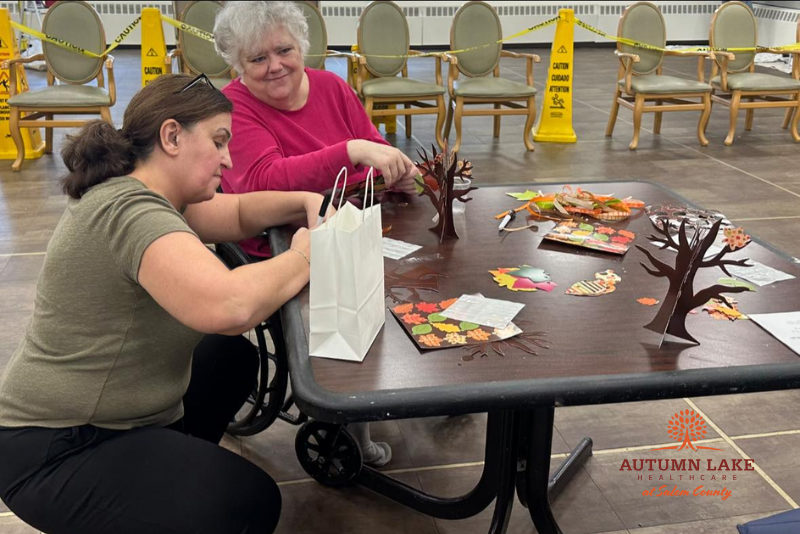
 

A staff member assisting a nursing home resident with a seasonal craft activity at a table.


Debunking the Myth: “Care Plans Equal a Loss of Freedom”

A common industry misconception is that “signing up for a care plan” is the first step toward losing one’s independence. In reality, the opposite is true. When a resident struggles for three hours to clean their apartment or manage complex medication schedules, they aren’t “free”, they are effectively trapped by their chores.

A personalized care plan acts as a freedom-enabler, removing the obstacles that prevent a resident from living their best life. This is why a premier nursing home and rehabilitation center in Salem, NJ focuses on wellness-driven recovery. By taking the weight of physical strain off the resident’s shoulders, they are granted the freedom to attend a garden party in the private courtyard or spend an afternoon in the on-site beauty salon.

Implementing Our Comprehensive Wellness Environment

In our community, we believe that the environment is just as important as the clinical care provided. Our newly-renovated facility includes a peaceful, modern lobby and a cutting-edge therapy room that promotes wellness and recovery in a joyful atmosphere. In addition to sub-acute rehabilitation, we are known for our excellence in long-term care, providing round-the-clock skilled nursing for a wide range of complex medical conditions.

This commitment to total well-being ensures that every resident, whether here for a short stay or a permanent home, enjoys the following amenities as part of their daily life:

  • Spacious private & semi-private rooms for personal sanctuary.
  • Complimentary cable & WiFi to stay connected with loved ones in nearby neighborhoods.
  • Private courtyard and garden for fresh air and outdoor relaxation.
  • Fine dining with a variety of menu selections to suit every palate.
  • Spacious Lounges designed for community building and relaxation.
  • On-site beauty salon for professional grooming and self-care.

Life in the Local Community

When families search for assisted living in Salem, they aren’t just looking for a room; they are looking for a lifestyle. Our residents often comment on how the local atmosphere contributes to their healing. During a recent audit of resident satisfaction for a firm, it was noted that the ability to transition seamlessly from clinical therapy to social recreation was the number one factor in resident happiness.

Whether a resident is recovering from surgery or requires ongoing medical supervision, the goal is always the same: to make the facility feel like a home. By offering daily housekeeping, laundry services, and on-site amenities, we ensure that the focus remains on “living” rather than “maintenance.” This level of detail is what distinguishes the top nursing homes in Salem, NJ from standard care facilities.

Financial Peace of Mind

Navigating the costs of personalized care can be daunting for families. To ensure our services remain accessible to the community, we accept Medicare, Medicaid, most insurances, and private pay. Our administrative team works closely with families to explain how these plans are structured, ensuring that the focus stays on the resident’s comfort rather than paperwork.

Frequently Asked Questions

What is the difference between a care plan and a medical chart?

A medical chart tracks history and treatments, whereas a care plan is a proactive roadmap for daily life. It includes social preferences, dietary likes/dislikes, and specific goals for independence.

How often are personalized care plans updated?

Typically, care plans are reviewed every 30 to 90 days, or immediately following any significant change in a resident’s health status, to ensure the level of support remains appropriate.

Can residents change their minds about the services they receive?

Yes. Autonomy is the core of personalized care. Residents and their families can request meetings to adjust the frequency or type of assistance provided at any time.

To Sum Up

At Autumn Lake Healthcare at Salem County, we combine clinical excellence with the warmth of a true home. Our team is dedicated to helping you or your loved one live with dignity, joy, and the perfect balance of support.

Experience the difference of a personalized care plan today. Schedule a tour today!
Securing Peace of Mind: How Long-Term Care Homes Ensure the Safety and Well-Being of Vulnerable Residents

Long-term care homes ensure resident safety through a multi-layered approach involving 24/7 clinical monitoring, rigorous staff background checks, secure architectural design, and personalized care plans. These facilities integrate standardized health protocols with emotional wellness programs to protect the physical and mental health of vulnerable seniors while providing a secure, supportive environment.

The Foundation of Resident Protection: Clinical Oversight

When a loved one transitions into a professional care setting, the primary concern for any family is the consistency of medical supervision. High-quality facilities utilize a proactive medical model where registered nurses and licensed practical nurses are on-site around the clock. This ensures that even subtle changes in a resident’s health, such as a slight change in gait or a minor respiratory shift, are addressed before they escalate into emergencies. For those researching rehab homes in Salem, this level of clinical vigilance is what distinguishes a standard facility from a center of excellence.

24/7 Safety Protocols: A Comparison of Care Levels

Safety is not a one-size-fits-all concept. A resident recovering from hip surgery has different security needs than a resident living with advanced Alzheimer’s. Understanding these nuances is the first step toward securing true peace of mind.

Safety Feature Assisted Living Skilled Nursing (LTC) Memory Care Units
Staffing Ratio Moderate High (RNs/LPNs onsite) Highest (Specialized)
Monitoring Emergency pull-cords Frequent clinical rounds Constant visual & GPS
Medication Self-managed or assisted Full nurse administration Full nurse administration
Environmental Standard accessibility Medical-grade safety Locked/Secured perimeters

During recent safety walkthroughs for families seeking rehab in Salem, NJ, we’ve noted that the most successful outcomes occur when the environment is tailored to the specific mobility restrictions of the individual.

5 Essential Pillars of Resident Well-Being

To maintain a high quality of life, top-tier facilities follow a structured framework to ensure no resident is overlooked.

  1. Comprehensive Risk Assessments: Upon admission, residents undergo fall risk, skin integrity, and cognitive evaluations to create a baseline for care.
  2. Integrated Health Technology: Use of smart beds and wearable sensors to detect unusual movement or changes in vitals in real-time.
  3. Strict Infection Control: Implementation of high-grade sanitation protocols and localized health monitoring to prevent the spread of seasonal illnesses.
  4. Social Engagement Programs: Curated activities designed to prevent the cognitive decline and depression often associated with senior isolation.
  5. Environmental Optimization: Anti-scald plumbing, non-slip flooring, and specialized lighting to reduce agitation and prevent accidents.

Families often compare these pillars when looking at assisted living in Salem, NJ, seeking a balance between a home-like atmosphere and the ironclad security of a medical institution.


A senior living resident waving while wearing a festive scarecrow hat and wristband.


Our Standard: The Autumn Lake Wellness Environment

At the heart of our mission is a specialized approach to care that transcends standard nursing. Our newly-renovated facility includes a peaceful, modern lobby and a cutting-edge therapy room that promotes wellness and recovery in a joyful atmosphere. This environment isn’t just about aesthetics; it is a clinical tool designed to reduce stress and accelerate healing.

In addition to sub-acute rehabilitation, we are known for our excellence in long-term care, providing round-the-clock skilled nursing for a wide range of complex medical conditions. Our residents enjoy a delightful dining experience and can choose to join us in our communal dining room or to stay in the privacy of their own room. This framework is built upon premium amenities that support mental health:

  • Spacious private & semi-private rooms for personal dignity.
  • Complimentary cable & WiFi to keep residents connected to the outside world.
  • Private courtyard and garden for safe, outdoor sensory experiences.
  • On-site beauty salon to boost self-esteem and maintain personal routines.
  • Daily Housekeeping & Laundry Service to ensure a sterile and dignified living space.

Whether a resident is here for a short-term stay or permanent residency, our model ensures that every logistical need, from fine dining with a variety of menu selections to complex medical management, is handled with precision. This is particularly vital for those browsing Salem assisted living options, where the quality of the physical environment directly impacts the resident’s psychological well-being.

Debunking the Myth: “Safety Means a Loss of Independence”

A common industry misconception is that a “safe” environment must be a restrictive, clinical one. Many families fear that ensuring the safety of a vulnerable resident requires “locking them down” or stripping away their autonomy.

The Reality: Modern long-term care focuses on “Positive Risk Management.” Instead of preventing a resident from moving to ensure they don’t fall, top-tier Salem nursing homes & elder care providers use Human-Centric Design. This includes “wayfinding” (using colors and landmarks to help navigation) and secure outdoor gardens. Safety is achieved through smart environment design and high staffing levels, allowing residents the freedom to explore their home without compromising their physical security.

Financial Accessibility and Peace of Mind

Securing high-quality care shouldn’t be an insurmountable financial burden. To ensure our community remains accessible to those who need it most, we accept Medicare, Medicaid, most insurances, and private pay. This flexibility allows families to focus on their loved one’s recovery rather than navigating complex billing cycles alone. Our administrative team works directly with providers to maximize benefits, ensuring that the transition into long-term care is as seamless as possible.

Frequently Asked Questions

How do long-term care homes prevent falls?

Facilities use a combination of frequent rounding, non-slip flooring, bed alarms, and regular physical therapy to strengthen resident mobility and balance.

What is the difference between skilled nursing and assisted living?

Skilled nursing provides 24/7 medical care by licensed nurses for complex conditions, while assisted living is designed for individuals who need help with daily tasks (like bathing or dressing) but do not require constant medical intervention.

How is resident medication managed?

In a skilled nursing environment, all medications are administered by licensed nurses who follow strict “five rights” protocols (right patient, drug, dose, route, and time) to prevent errors.

Can residents bring their own furniture?

Most facilities encourage residents to bring personal items like photos and small pieces of furniture to make their private or semi-private rooms feel more like home.

To Sum Up

At Autumn Lake Healthcare at Salem County, we believe that safety is the foundation upon which a joyful life is built. From our cutting-edge therapy rooms to our peaceful private courtyards, every inch of our facility is designed to provide the highest level of skilled nursing in an atmosphere of warmth and dignity.

Are you ready to see how we prioritize your loved one’s safety and happiness?

Schedule a Tour of Our Newly Renovated Facility Today!

Understanding the Difference: Short-Term Rehab vs. Long-Term Living at Autumn Lake

The primary difference between short-term rehab and long-term care is the clinical goal and the expected duration of stay. Short-term rehabilitation is a high-intensity, temporary program designed to help patients recover from surgery or illness and return home, whereas long-term care provides permanent, 24/7 skilled nursing support for individuals with chronic conditions who can no longer live independently.

Defining the Two Paths of Clinical Care

When a loved one faces a health transition, the terminology can feel overwhelming. You might hear doctors discuss “sub-acute care,” “skilled nursing,” or “rehabilitative therapy.” At its core, the decision comes down to whether the individual needs a functional bridge to get back to their previous life or a permanent residence that offers a higher level of medical safety. For families researching nursing homes in Salem, NJ, it is important to realize that modern facilities are sophisticated medical environments capable of handling complex recovery trajectories while offering a community-focused lifestyle.

Short-Term Rehabilitation: The Goal of Independence

Short-term rehab is typically an extension of a hospital stay. If you or a family member has undergone a hip replacement, cardiac surgery, or is recovering from a stroke, a rehabilitation center in Salem, NJ, provides the intensive physical, occupational, and speech therapy required to regain functionality. This model is built on high-intensity schedules where patients work toward specific milestones to ensure they can safely return to their own residence.

Long-Term Living: The Goal of Quality of Life

Conversely, long-term living is for those whose medical needs have surpassed what can be managed at home. This transition often occurs when a chronic illness, such as advanced Parkinson’s or heart failure, requires round-the-clock monitoring by licensed clinicians. Choosing a nursing home and rehabilitation center in Salem, NJ, ensures that the resident has immediate access to medical intervention while enjoying a social, structured environment that prioritizes dignity and comfort.


A staff member and a resident at a nursing home smiling together during an outdoor event.


The Autumn Lake Standard: Our Proprietary Care Model

We believe that the environment is a vital component of the clinical outcome. Our newly-renovated facility includes a peaceful, modern lobby and a cutting-edge therapy room that promotes wellness and recovery in a joyful atmosphere. In addition to sub-acute rehabilitation, we are known for our excellence in long-term care, providing round-the-clock skilled nursing for a wide range of complex medical conditions.

A central pillar of our approach is providing a delightful dining experience where residents can choose to join us in our dining room or stay in the privacy of their own room. This philosophy extends into our suite of high-end amenities designed to make a care center in Salem, NJ, feel like a true home:

  • Spacious private & semi-private rooms with modern finishes.
  • Complimentary cable & WiFi to maintain family connections.
  • Private courtyard and garden for outdoor therapy and relaxation.
  • Fine dining featuring a variety of menu selections.
  • On-site beauty salon for grooming and self-care.
  • Spacious Lounges for hosting family visits or community events.
  • Daily Housekeeping & Laundry Service to remove the burden of chores.

By combining these luxuries with 24/7 medical oversight, we ensure that senior living in Salem, NJ, is defined by vitality rather than just clinical maintenance. We accept Medicare, Medicaid, most insurances, and private pay to ensure our services remain accessible to our neighbors in the community.

The Comparison Guide

Feature Short-Term Rehabilitation Long-Term Care (Nursing Home)
Primary Goal Recovery and discharge home. Management of chronic health needs.
Typical Stay Days to several weeks. Permanent or indefinite residency.
Therapy Frequency High-intensity (often daily). Maintenance-based or as needed.
Room Style Clinical focus on mobility. Personalized residential setting.

Industry Myth: “Rehab is Just a One-Way Trip”

A common misconception is that once a senior enters a skilled nursing facility for rehab, they will never return home. In reality, the modern clinical model is built on “Discharge Planning” from the first day of admission. Many residents who live in neighborhoods near Mannington or Quinton come to us specifically for a “tune-up” after a fall. Our goal is to restore the strength required for you to return to your garden and your porch as quickly as possible.

Frequently Asked Questions

How long does a typical short-term rehab stay last?

Most patients stay between 20 and 100 days, depending on their progress and their physician’s recommendations for safe discharge.

Can a short-term rehab patient transition into long-term care?

Yes. If a patient’s condition evolves and they no longer meet the safety criteria to live alone, our team facilitates a seamless transition into our long-term care program.

Does Medicare pay for long-term care?

Medicare typically covers acute, rehabilitative care following a hospital stay. Long-term “custodial” care is generally funded through Medicaid, private insurance, or personal funds.

To Sum Up

Choosing the right path for recovery is a significant decision for any family. Whether you are looking for a short-term bridge back to health or a permanent, supportive community for a loved one, our team is ready to provide the professional guidance you need.

Experience our newly-renovated facility firsthand. Visit us to schedule a tour and see how we redefine care.